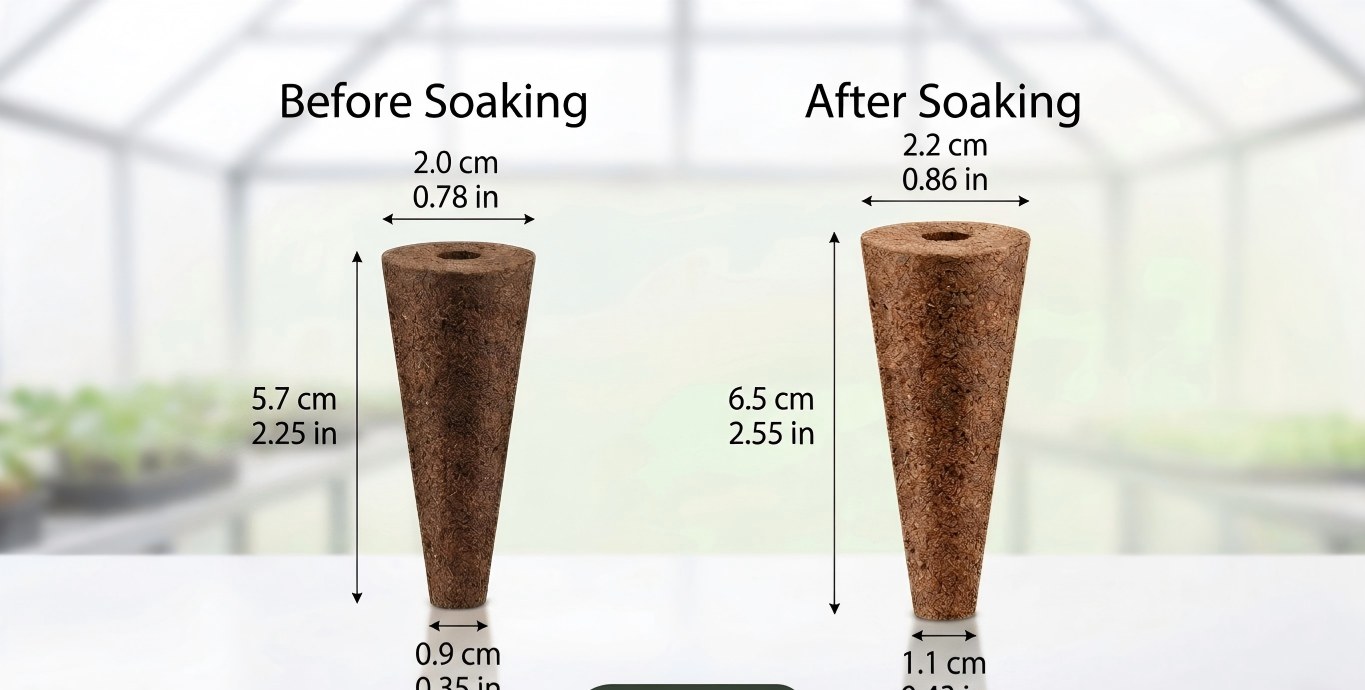
Record geometry, hydration and machine settings in one trial file. A plug that fits when dry can behave differently after irrigation, and a machine result without moisture context cannot be repeated.
1. Measure the receiving interface
Record tray opening, depth, taper, drainage opening and any support ledge. Photograph the measurement points so supplier and buyer use the same geometry.
2. Compare dry and hydrated fit
Measure the plug before hydration and after the agreed conditioning method. Observe seating depth, movement, drainage clearance, removal force and any deformation without forcing the sample into the tray.
3. Define the handling condition
For manual or automated pickup, state the moisture condition, elapsed time, grip point and handling sequence. These inputs should remain fixed while plug or machine variables are compared.
4. Progress through machine stages
Use manual pickup, slow cycle, intended production speed and a repeated run. Categorize failures such as missed pickup, deformation, crumbling, misplacement or tray obstruction instead of recording only a total failure count.
5. Approve a configuration, not a vague product
The approval record should name the plug model, sample reference, tray, machine, gripper setting, moisture method and accepted operating window. Recheck after any material, tray or machine-setting change.
Buyer evaluation matrix
| Measurement | Condition | Record |
|---|---|---|
| Tray geometry | Empty production tray | Opening, depth, taper and drainage |
| Dry plug | As received | Dimensions and seating |
| Hydrated plug | Agreed water method and time | Fit, clearance and deformation |
| Pickup | Recorded moisture and gripper setting | Failure category and cycle |
| Repeatability | Approved configuration | Results across trays or runs |
Send the crop or application, tray dimensions, current workflow, destination, expected volume range and required evidence with the inquiry. MCCS sales can then discuss a relevant sample route without changing protected product specifications.