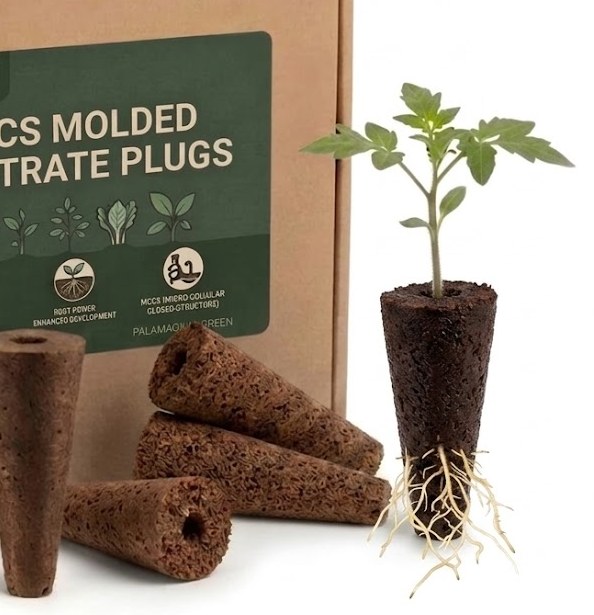
Approve a propagation plug only after the same sample lot has passed tray fit, hydration, wet-size stability, root handling and crop-response checks under the greenhouse's own operating conditions.
Start with the production workflow
Document the crop, tray opening, holder depth, irrigation method, transplant stage and current handling issue before comparing media. This prevents a visually similar plug from being approved for the wrong production step.
- Measure the tray opening and usable depth.
- Record whether loading and transplanting are manual or automated.
- Identify the current medium and the operational reason for testing an alternative.
Build a controlled sample comparison
Run the MCCS sample beside the current propagation medium using the same seed lot, nutrient program, light schedule and greenhouse zone. Keep each treatment clearly labelled and record observations at fixed intervals.
- Use enough replicates to distinguish a repeatable result from an isolated plant.
- Photograph dry fit, hydrated fit and the root zone at transplant.
- Record handling time and rejected plugs as operational observations.
Review physical and chemical evidence together
Physical fit alone is not sufficient. Ask for current-batch EC and pH information with the test method stated, then compare those records with hydration, drainage and crop observations from the trial.
- Do not compare EC values produced by different extraction methods as if they were equivalent.
- Confirm any project-specific AFP or WHC requirement before quoting.
- Retain the sample lot reference with the trial record.
Set a commercial decision gate
Purchasing, growing and operations teams should agree the pass criteria before the sample arrives. A result can then move to a larger line trial, a revised model selection or a documented stop decision.
- Pass: fit, handling and crop response meet the agreed range.
- Revise: the format is promising but tray or irrigation assumptions need adjustment.
- Stop: the sample cannot be integrated without unacceptable process changes.
Prepare for recurring supply
Before bulk discussion, confirm the selected model, sample reference, packaging condition, carton planning, destination, documentation needs and expected order cadence with sales. Final specifications belong in the approved quotation and project documents.
Buyer evaluation matrix
| Evaluation area | Buyer protocol | Evidence to retain |
|---|---|---|
| Tray fit | Dry and hydrated fit in the production tray | Measurements and labelled photos |
| Hydration | Fixed water volume, time and method | Time log and surface observations |
| Handling | Normal loading and transplant workflow | Breakage and handling notes |
| Crop trial | Side-by-side controlled comparison | Growth and root-zone observations |
| Shipping | Inspect the delivered sample lot | Carton and product-condition record |
Send the crop or application, tray dimensions, current workflow, destination, expected volume range and required evidence with the inquiry. MCCS sales can then discuss a relevant sample route without changing protected product specifications.