The best hydroponic grow plug is the one that fits the buyer's tray and irrigation method, hydrates consistently, supports the intended crop stage, protects roots during handling and can be supplied with repeatable lot and packaging controls. Material name alone is not enough to approve a plug.
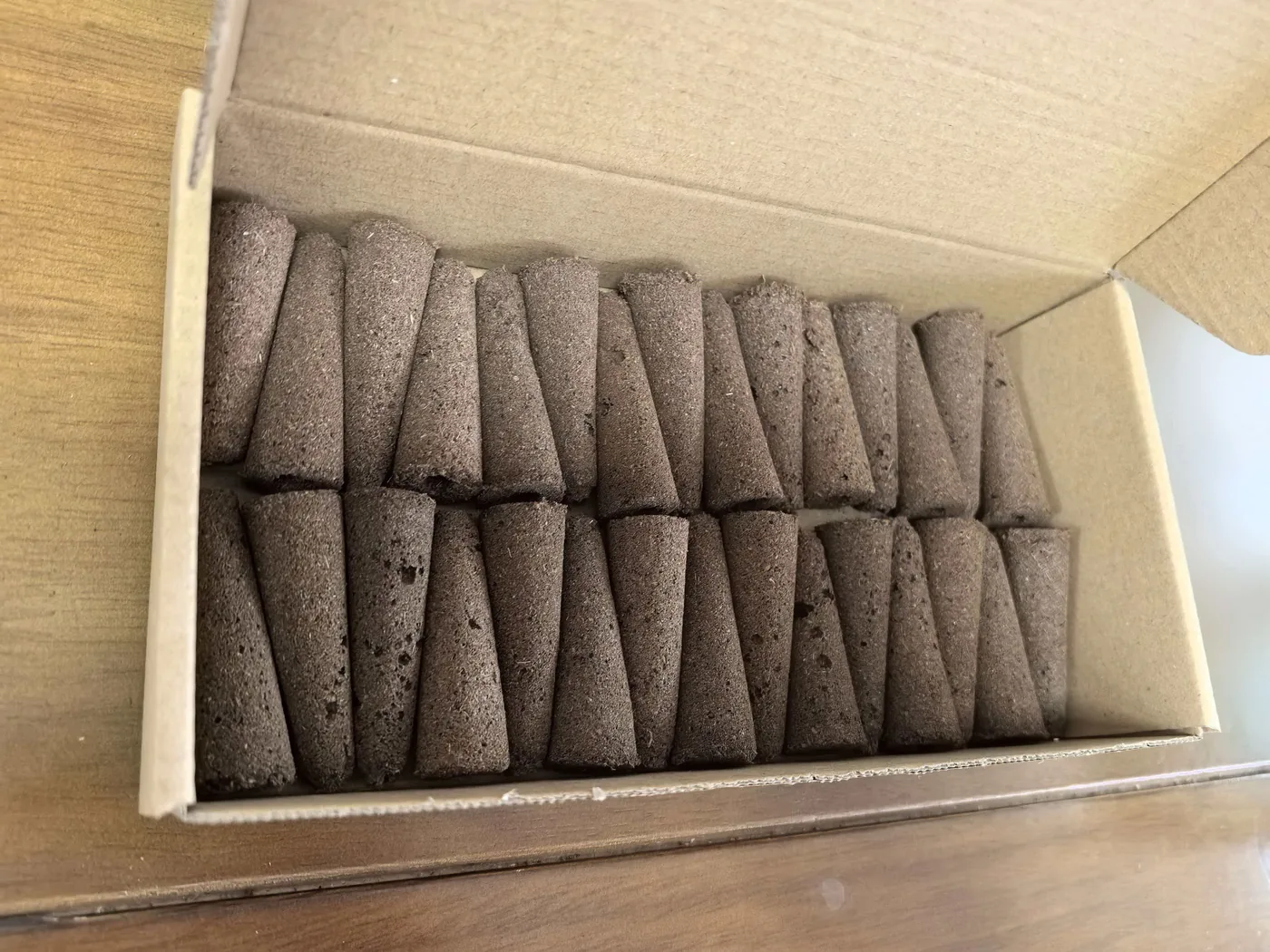
What is a hydroponic grow plug?
A hydroponic grow plug is a small propagation unit that holds a seed or cutting while roots develop before transplanting or transfer into a production system. Commercial buyers use plugs in greenhouse propagation, plant factories with artificial lighting (PFALs), nurseries, vertical farms, tissue-culture acclimatization and retail growing kits.
Grow plugs can be manufactured from molded coir blends, peat blends, rockwool, bonded foam or other fibrous materials. They are not interchangeable by default. The plug must work with the crop, tray, irrigation schedule, transplant method and labor process used by the buyer.
Commercial grow plug comparison
| Format | Useful characteristics to evaluate | Questions before approval |
|---|---|---|
| Molded coir and peat plug | Formed shape, plant-fiber-based media, adjustable geometry and formulation by project. | Does the wet plug retain its intended size, drainage behavior and handling strength in the buyer's system? |
| Rockwool plug | Established commercial workflows and consistent manufactured geometry. | How will irrigation, handling, worker protection and end-of-use disposal be managed? |
| Foam or sponge plug | Clean handling and a uniform manufactured shape for some propagation systems. | Does moisture distribution and root emergence match the crop and transplant process? |
| Loose-filled tray media | Flexible formulation and easy adjustment of the media blend. | Can filling density, labor, mess and unit-to-unit consistency be controlled at scale? |
This table is a purchasing framework, not a universal performance ranking. Buyers should compare shortlisted products in the same crop and operating conditions.
Seven checks before ordering hydroponic grow plugs
1. Measure dry and wet tray fit
Record the tray opening, holder diameter, depth, taper and the point where the plug contacts irrigation water. Then compare both the dry plug and the hydrated plug. A plug that appears suitable when dry can become too tight, too loose or too tall after hydration.
2. Test hydration and drainage behavior
Use the water source and irrigation method planned for production. Record initial wetting time, whether dry pockets remain, drainage after saturation, surface stability and the interval before the next irrigation event. The goal is repeatable behavior, not simply maximum water absorption.
3. Check root access and containment
Observe where roots emerge, whether the plug separates during lifting, and whether exposed roots are vulnerable during automatic or manual transplanting. A useful trial records both plant growth and operational handling.
4. Match the plug to crop stage
Seed germination, cutting propagation, tissue-culture acclimatization and pre-transplant nursery stages can require different planting holes, plug heights and moisture profiles. Provide the supplier with the crop and propagation stage rather than requesting a generic hydroponic plug.
5. Include local water and nutrient conditions
Water quality, nutrient solution, irrigation frequency, temperature and airflow can change plug behavior. Run the sample under the same practical conditions planned for production, particularly for arid-climate greenhouses and recirculating systems.
6. Review lot consistency and documents
Ask how the supplier controls material preparation, molding, drying, packing and batch records. Qualified projects can also request available test reports and export documentation. Documents support purchasing review, but they do not replace a crop trial.
7. Calculate landed operational cost
Unit price is only one part of the decision. Compare packing density, sample and bulk freight, storage, tray-filling labor, breakage, transplant handling and packaging requirements. A plug that reduces rework may justify a different unit cost, but the buyer should verify the saving in its own operation.
A three-stage sample trial
- Bench check: measure dry dimensions, wet dimensions, hydration behavior, drainage and physical stability using the intended water source.
- Crop check: compare emergence or rooting, irrigation response and plug consistency across a representative group under the same crop conditions.
- Handling check: lift and transplant plants using the planned manual or automated workflow, then record root exposure, plug breakage and tray release.
Keep one comparison sheet for every candidate. The same tray, crop, water, lighting and observation method should be used so the purchasing team is comparing like with like. The commercial greenhouse plug evaluation checklist provides a more detailed scoring framework.
What published PFAL research says
A 2025 peer-reviewed Agronomy study evaluated one molded coconut coir substrate formulation for lettuce and pak choi in a PFAL and compared it with sponge and rockwool treatments. Under the study conditions, roots exposed outside the substrate were 13.40% shorter for lettuce and 19.92% shorter for pak choi than in the sponge treatment. The authors also reported yield increases of up to 27.33% for lettuce and 67.19% for pak choi, with maximum reductions in energy consumption per unit yield of 22.98% and 40.91%, respectively.
These results are useful for forming trial questions around root exposure, transplant handling, yield and energy use. They should not be treated as guaranteed outcomes for every MCCS model, crop, irrigation system or greenhouse. The study evaluated its stated molded coir formulation and PFAL conditions; commercial buyers should still run a controlled local trial.
Information to send with a sample request
- Crop and propagation stage.
- Tray, cup or holder measurements.
- Irrigation method and how the plug contacts water.
- Destination country and intended growing environment.
- Estimated monthly or project volume.
- Clarify packaging format, carton quantity and monthly volume.
- Bulk carton, retail or private-label packaging requirement.
These details help a supplier shortlist models before shipping. Buyers in the Gulf can also review the Saudi and Middle East sample plan; North American teams can use the North America greenhouse sourcing guide. Brands preparing retail packs can review the private label grow plug and OEM packaging program.
Hydroponic grow plug FAQ
What should a commercial buyer compare when selecting hydroponic grow plugs?
Compare dry and wet dimensions, holder contact, hydration and drainage behavior, root access, wet handling strength, crop stage, lot consistency, packaging protection and supplier documentation under your own operating conditions.
Are molded coir and peat grow plugs the same as compressed coco bricks?
No. Molded grow plugs are formed units intended for direct tray, cup or holder placement. Compressed coco bricks are bulk media products that normally expand into loose material for mixing or filling.
Can molded coir grow plugs replace rockwool or foam plugs?
They can be evaluated as an alternative, but suitability depends on the crop, irrigation method, holder geometry, transplant process and formulation. Run a controlled side-by-side trial before bulk purchasing.
What information should be included in a grow plug sample request?
Provide the target crop, propagation stage, tray or holder measurements, irrigation method, destination market, estimated volume and packaging requirement.
Sources and scope
- Song et al., From Coconut Waste to Circular Plant Factories with Artificial Light, Agronomy 15(8), 1929 (2025).
- DOAJ article record and abstract.
MCCS Growing Media prepared the buyer checks in this guide for sourcing discussions. Product approval remains the buyer's responsibility and should be based on samples tested under the buyer's own conditions.