Cutting Propagation: Root Observations and a Nursery Trial Checklist
These original photographs were supplied by MCCS from its participation as an exhibitor in Yunnan. They show cuttings grown in molded substrate plugs. Visible roots are useful to inspect, but a purchasing decision also needs a trial with your crop, tray and growing conditions.
Three views of rooted cuttings
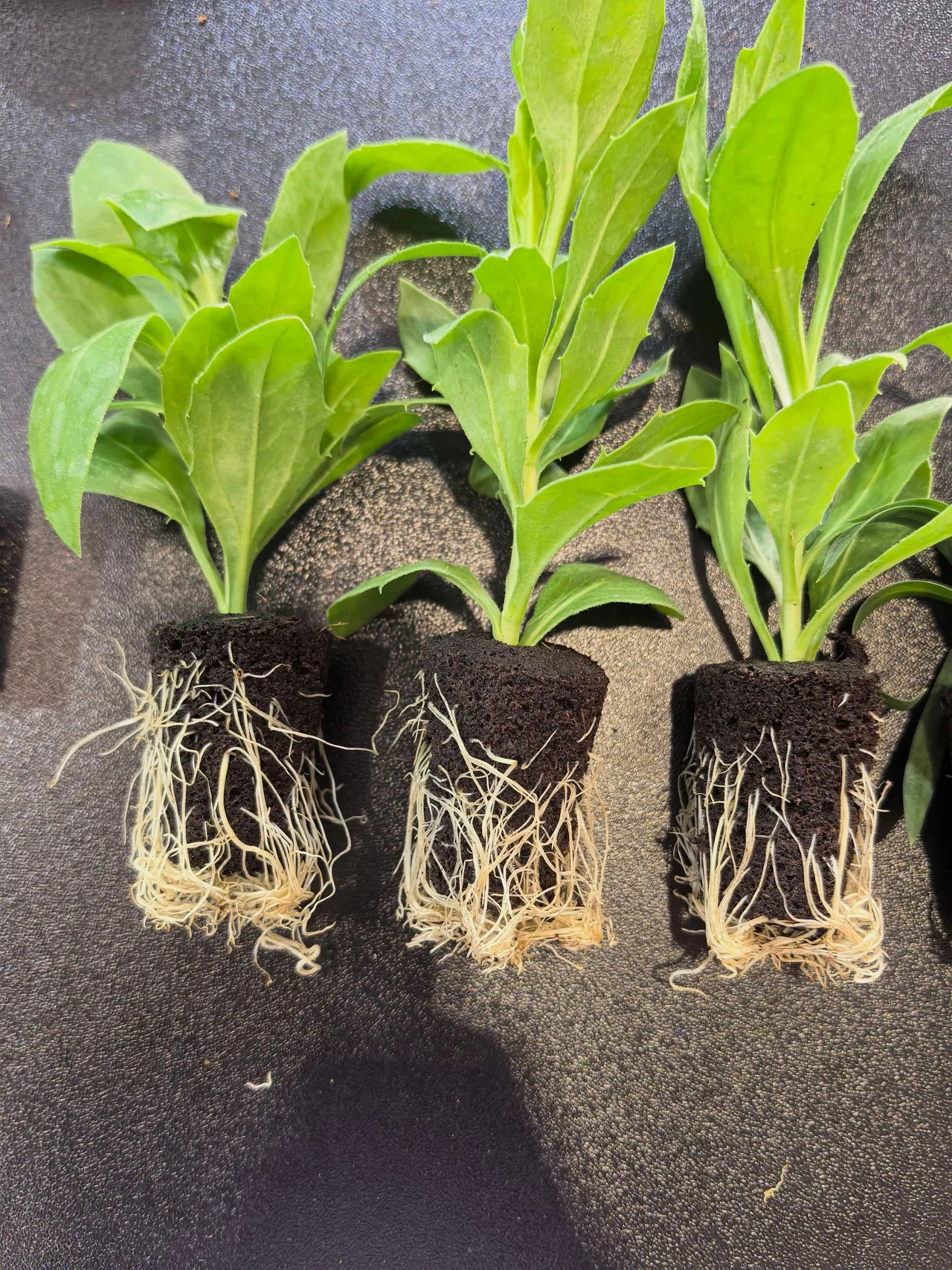
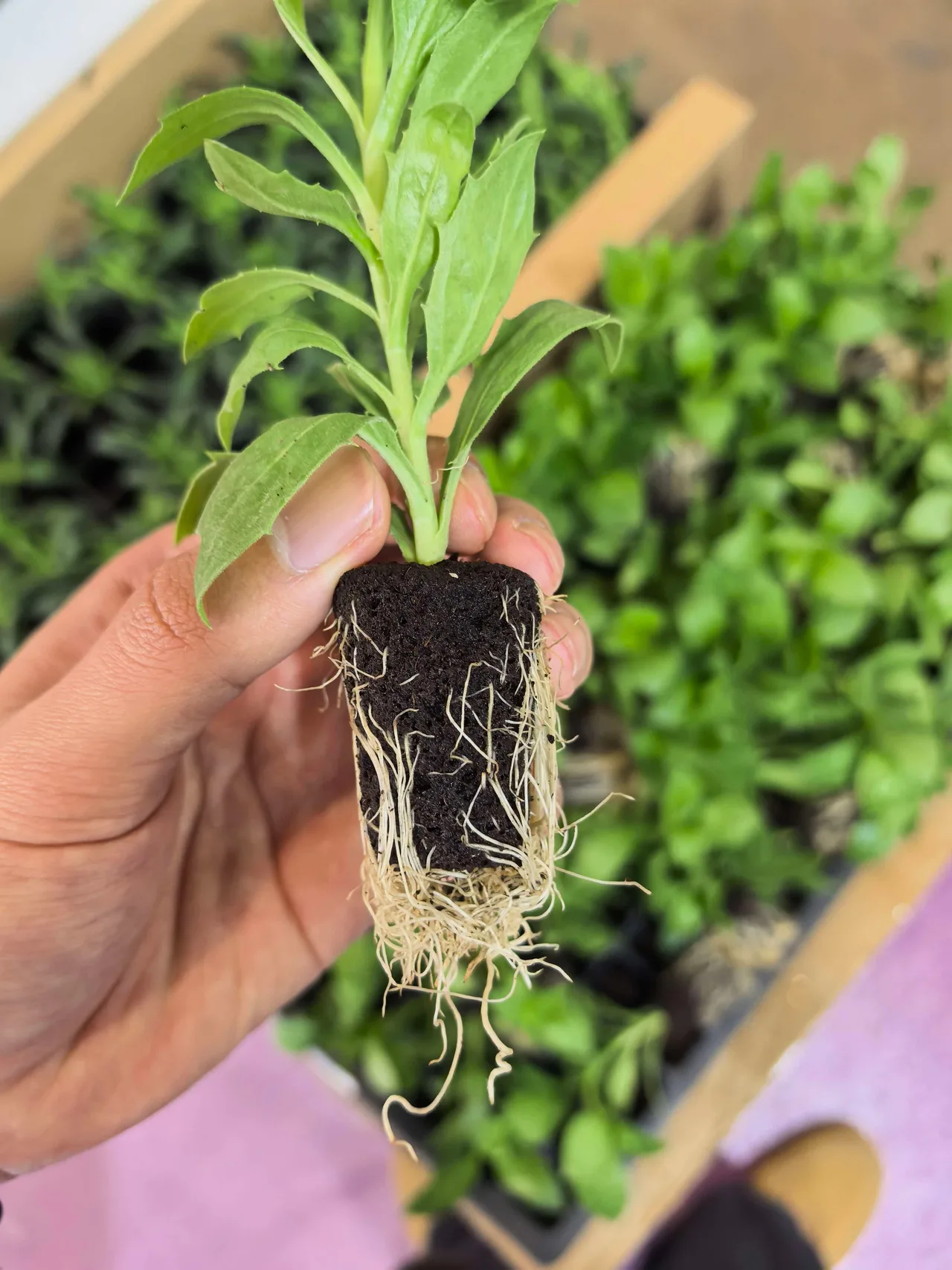
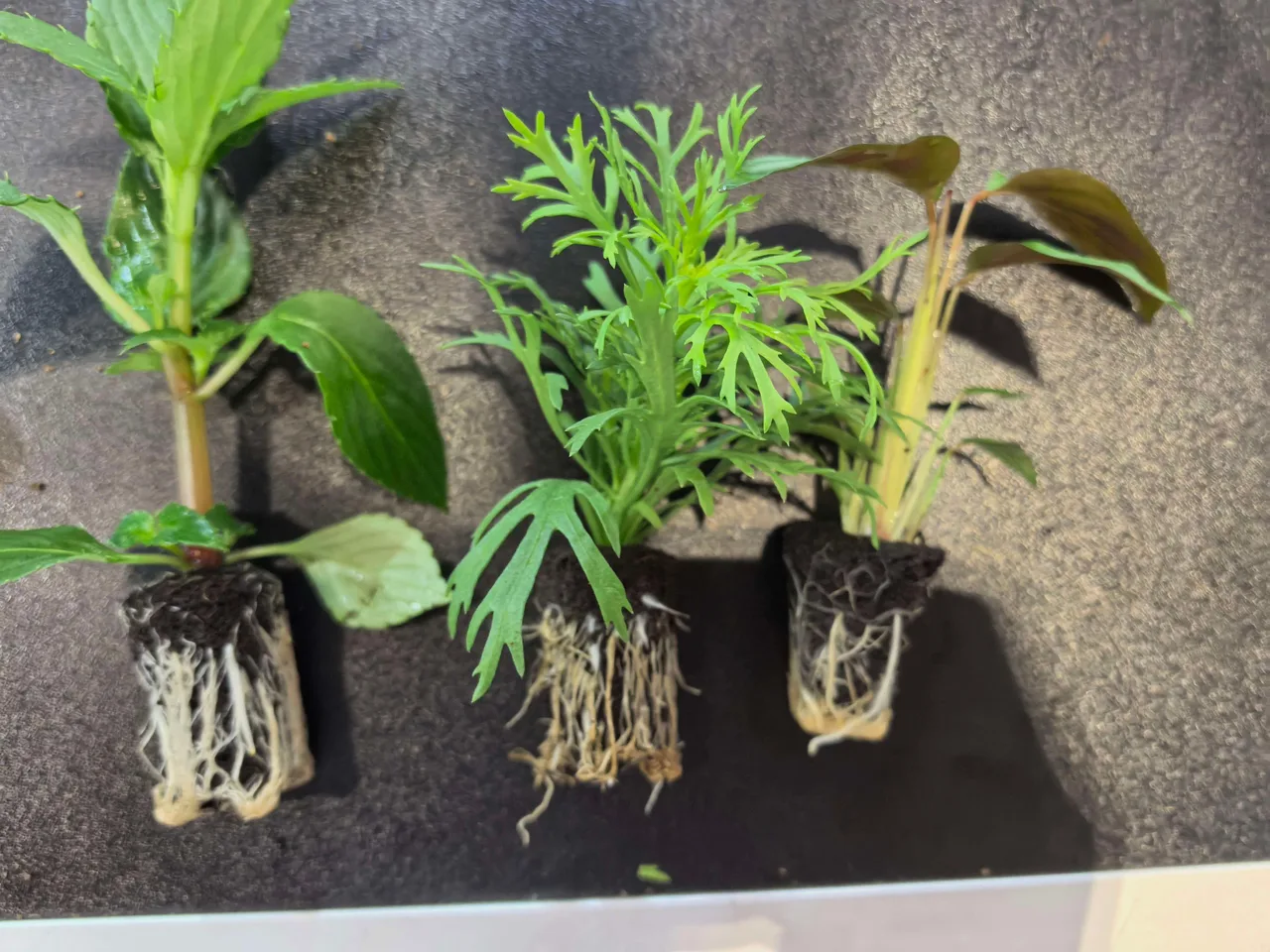
What can we see?
Pale roots are visible along the outside of the plugs and below their bases. The photographed plugs retain a recognizable outline. These are observations at the time of photography, not measurements of rooting speed, strength or transplant survival.
What the photographs do not establish
The record does not document crop varieties, rooting dates, irrigation conditions, plug models or a control group. It cannot establish earlier rooting, absence of root circling, zero shedding or reduced transplant shock. A photograph also cannot measure air-filled porosity or EC.
A practical nursery evaluation
- Confirm the crop, cutting type and tray geometry before selecting a model. Compare the approved catalog dimensions with your actual tray.
- Use comparable cuttings and a current-substrate control. Label batches and record the number started, treatments, temperature, humidity and irrigation.
- At agreed observation dates, record rooting counts and photograph the sides and base. Note moisture, root distribution and losses instead of judging only the most attractive specimen.
- Check plug removal and handling under your actual moisture conditions. Record breakage or loose material rather than assuming that a cohesive photo means no shedding.
- Continue observations after transplanting. Record plant establishment and losses over the same period for each group before deciding on repeat supply.
Questions from propagation buyers
Do these photos prove faster rooting?
No. A documented timeline and a comparable control are needed to assess rooting speed.
Can we identify the model from the photo?
No. Confirm the tray dimensions and compare the catalog; do not estimate plug size from a hand.
How do we arrange a sample evaluation?
Send the crop, tray details, destination and intended trial quantity. Sample availability and shipping arrangements are confirmed before dispatch.
Discuss a trial for your nursery
MCCS supplies molded coconut coir and peat substrate plugs. Share your application and tray details to discuss a suitable sample shortlist.